


Project Details
- Category Alloy Testers
- Date November 11, 2021
- Client Name Lawrence Hilliard
- Budget $1250.00
- Project Manager Hamm John
- Location New York, USA
- Website AI-Lab.Com
- rating
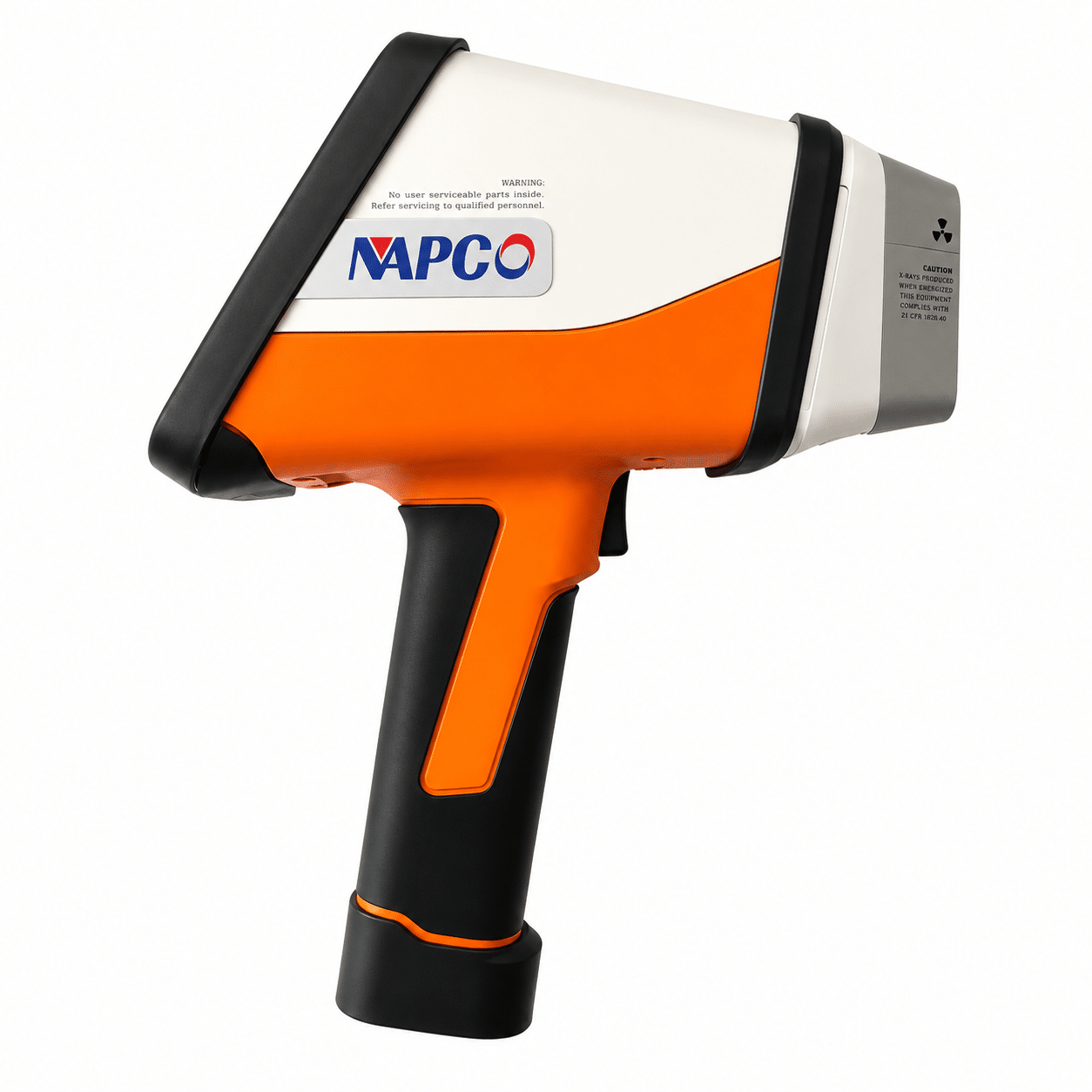
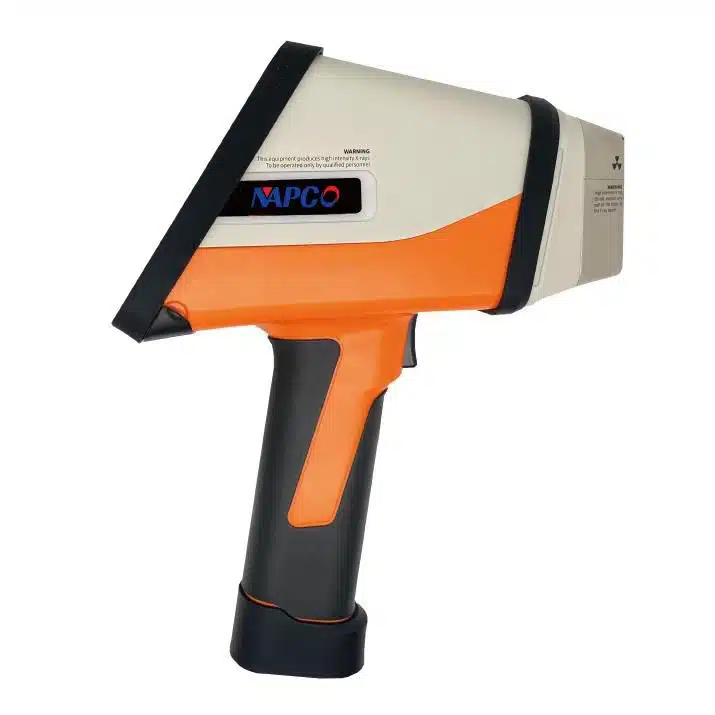
Mark 900 XRF Alloy Tester
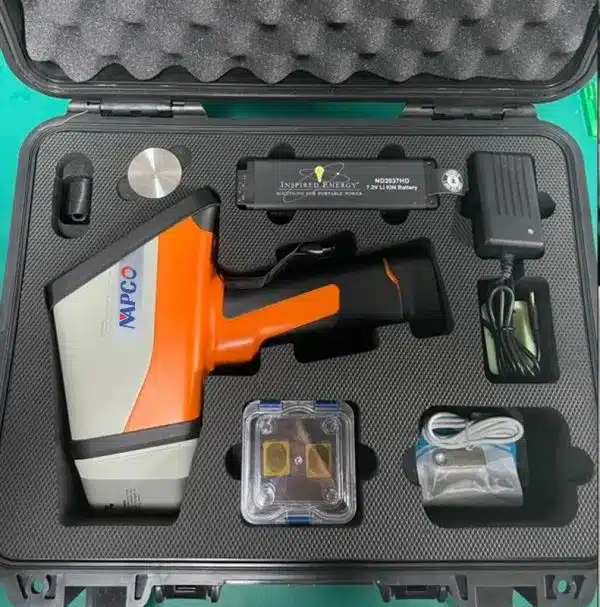
The Mark 900 is Napco’s advanced benchtop XRF analyzer, specifically optimized for comprehensive alloy analysis in manufacturing, quality control, and material verification. Trusted by metal fabricators, automotive suppliers, aerospace firms, and electronics manufacturers, it delivers lab-quality results for complex multi-element alloys without the need for destructive testing.
Why the Mark 900 stands out for alloy professionals:
- Ultra-high accuracy: ≥ 99.95% precision across a wide range of alloys (stainless steel, aluminum, copper, titanium, nickel-based, and more)
- Rapid multi-element detection: Analyzes up to 30 elements simultaneously in just 20–60 seconds
- Non-destructive & versatile: Handles solid samples, powders, wires, and coatings – no sample prep required
- Advanced alloy grade identification: Automatically matches compositions to industry standards (e.g., ASTM, DIN, GB) with PMI (Positive Material Identification) mode
- Coating thickness measurement: Quantifies layers like Ni on Cu or Zn on steel, critical for corrosion resistance and plating quality
- Exceptional stability: Long-life reproducibility ensures consistent results over thousands of tests
- Intuitive alloy-specific software: Custom libraries for 1,000+ alloy types, with one-click reporting and export options
- Robust build for industrial use: IP54-rated enclosure, anti-vibration design, and 24/7 operation capability
- Safety first: Low radiation (<0.05 μSv/h), full shielding, and emergency shutoff
Ideal for:
- Metal fabrication & machining shops
- Aerospace & automotive component testing
- Electronics & semiconductor manufacturing
- Pipeline & pressure vessel inspection
- Recycling & scrap sorting for alloys
- R&D labs for new material development
Key Technical Specifications
- Detector: High-resolution SDD (Silicon Drift Detector) with <140 eV resolution
- X-ray source: 60 kV tungsten anode tube for deep penetration
- Elements analyzed: From Mg to U (e.g., Fe, Cr, Ni, Mo, Al, Si, Cu, Ti, V, Nb, Ta, W, Co, Mn, Zn, Pb)
- Measurement range: 0.01% – 100% concentration
- Spot sizes: Switchable 1 mm, 3 mm, 8 mm collimators for micro to macro analysis
- Display: 12-inch HD touchscreen with glove-compatible interface
- Connectivity: USB, Ethernet, Wi-Fi; integrates with LIMS and ERP systems
- Dimensions/Weight: 450 × 300 × 350 mm / 28 kg – compact yet powerful
- Power: 100–240V AC, low consumption (150W)
Elevate your alloy verification from time-consuming wet chemistry or OES (Optical Emission Spectroscopy) to instant, portable XRF excellence. The Mark 900 minimizes downtime, prevents costly mix-ups, and ensures compliance with global standards.
Project Tips
Get lab-grade alloy verification running in your facility on day one
1. 5-Minute Physical Setup
- Place on any stable workbench (vibration-dampening mat recommended for machining shops).
- Connect to 100–240V power + Ethernet/Wi-Fi for LIMS integration.
2. First-Time Setup (15 minutes total)
- Load factory alloy library (1,000+ pre-installed grades – AISI, DIN, GB, JIS, UNS).
- Run included 316L & Al 6061 calibration standards → system self-calibrates.
- Add your company logo once → every report is automatically branded.
3. Daily Workflow That Prevents Mistakes
- Operator scans barcode → selects part number → places component → presses “Start”.
- 30–60 seconds later → screen shows exact chemistry + pass/fail vs spec.
- Auto-generates PDF certificate with photo of tested spot (perfect for AS9100/ISO audits).
4. Pro Tricks by Application
| Application | Best Practice |
|---|---|
| Incoming material inspection | Test every heat lot in 60 sec before releasing to production |
| Weld & heat-affected zones | Use 3 mm collimator + “coating mode” to ignore surface oxidation |
| Finished machined parts | 1 mm spot size for tiny features; no surface prep needed |
| Scrap sorting | Create custom “pay grades” – instantly separate 304 vs 316 vs Inconel |
| Coating/plating thickness | Switch to thickness mode – measures Zn, Ni, Cr layers in microns |
5. Zero Maintenance Reality
- Weekly: wipe sample window with alcohol.
- Yearly: free remote health check from Napco.
- Tube life: 10+ years in normal industrial use.
Overview & Challenge
The Hidden Crisis in Alloy Manufacturing & Material Verification
For decades, factories, metal suppliers, aerospace contractors, and scrap yards relied on slow, expensive, and often destructive methods to verify alloy composition and quality:
| Traditional Method | The Real-World Pain Points (The Challenge) |
|---|---|
| Wet chemistry / lab analysis | 3–10 days turnaround, high cost per sample, destroys the part |
| Spark OES (Optical Emission) | Requires perfect flat surface, burns the material, not suitable for finished parts or field use |
| Portable spark guns | Slow, needs argon gas, surface preparation, damages high-value components |
| Magnetic & eddy current tests | Only works on ferrous, cannot quantify exact chemistry or detect trace elements |
| Outsourcing to external labs | Delays production, shipping risks, $50–300 per test, no real-time decision making |
| Visual inspection + certificates | Easily forged supplier documents → catastrophic failures (wrong grade used in aircraft, valves, etc.) |
Daily consequences companies suffered:
- Production lines stopped waiting for lab results
- Wrong alloy shipments accepted → millions in rework or recalls
- Failed audits and rejected parts due to missing PMI documentation
- Safety incidents from undetected off-spec materials in critical applications
- Scrap yards losing 5–15% profit by mis-sorting high-nickel or titanium alloys
The Mark 900 XRF Solution – Instant, Non-Destructive, 100% Reliable
The Mark 900 benchtop XRF alloy tester ends the era of destructive testing and week-long delays. In 20–60 seconds it delivers full elemental chemistry and automatic grade ID — non-destructively — on finished parts, welds, powders, wires, or coatings.
From waiting days and damaging parts → to instant verification and zero risk in under one minute.