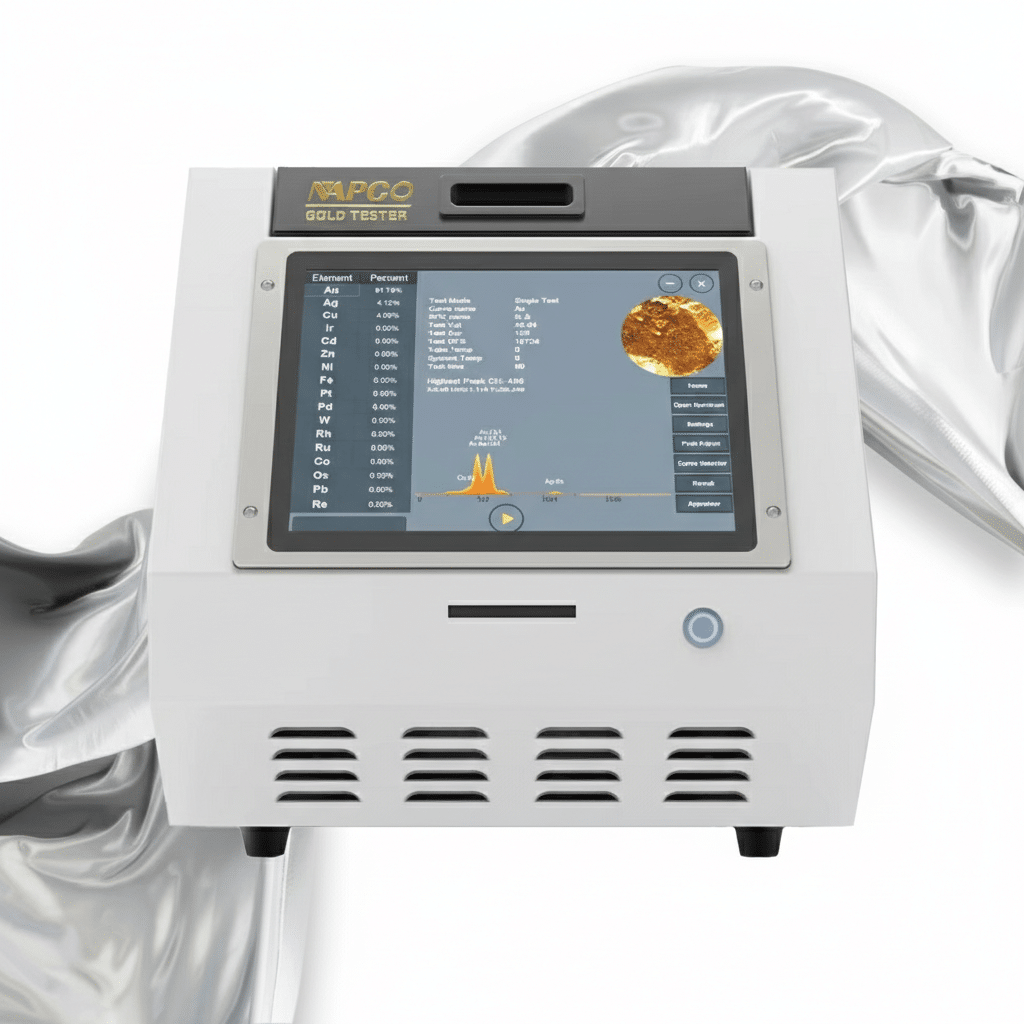
As an important tool in the field of precious metal detection, silver detectors are widely used in jewelry, electronics, chemicals and other industries. Their technical performance directly affects the detection accuracy and efficiency. Different types of detectors have significant differences in core principles, applicable scenarios and application scopes. Understanding these differences helps companies accurately match their needs.
From the technical principle point of view, silver detectors are mainly divided into two categories: spectral detection and electrochemical detection. Spectroscopic detectors analyze elemental composition through X-ray fluorescence (XRF) technology, which has the advantage of non-destructive detection and is suitable for quality control of finished silver products. Electrochemical detectors rely on electrolytic reactions to measure metal content. Although they are extremely accurate, they require sample pretreatment and are often used for high-precision analysis in laboratory scenarios.
In terms of performance parameters, the detection time of spectroscopic detectors is usually from a few seconds to tens of seconds, which is suitable for rapid screening of large batches of samples, but they can only provide element types and approximate proportions, and cannot accurately measure the content. Although the electrochemical detector takes a long time to measure a single time (about 1-5 minutes), it can provide concentration data at the 0.01% level, which is suitable for industrial production that requires strict quality control. In addition, the spectrometer is greatly affected by the surface cleanliness of the material, while the electrochemical equipment has lower requirements for the sample morphology.
In market applications, XRF instruments have become the preferred tool for jewelry stores to identify the authenticity of silver due to their portability and instant feedback characteristics. Electronic manufacturing companies tend to use electrochemical testing to ensure that the silver content in the solder meets the production standards of electronic components. The price range of different instruments also reflects the technical differences. The basic spectrometer costs about 20,000 to 50,000 US dollars, while the high-precision electrochemical system can reach more than 100,000 US dollars.
When choosing a silver detector, companies need to comprehensively consider the testing needs, budget and ease of operation to achieve a balance between performance and cost.