Ensuring the authenticity and purity of gold jewelry is crucial for buyers, sellers, and manufacturers alike. Accurate gold testing prevents costly mistakes, builds trust with customers, and provides confidence in every transaction. Whether you’re a jeweler, a goldsmith, or someone looking to test gold jewelry at home, this guide will walk you through how to test gold jewelry using both professional tools and DIY methods.
Why Testing Gold Jewelry Matters
Gold is a timeless and valuable commodity used in jewelry, investments, and industrial products. However, not all gold jewelry is created equal. Counterfeit, gold-plated, or mixed-metal items often enter the market, misleading buyers about the true value. Testing gold jewelry is critical to identify its purity (measured in karats) or detect whether it’s genuine gold at all.
Common Challenges in Testing Gold Jewelry
Without proper tools or expertise, accurately determining gold purity can be difficult. Some common challenges include:
Distinguishing genuine gold from plated or alloyed metals.
Measuring the gold purity in karats (e.g., 18k, 22k).
Non-destructive testing methods that preserve the integrity of the jewelry.
Now, let’s explore some practical and reliable ways to test gold jewelry.
Professional Methods to Test Gold Jewelry
1. X-Ray Fluorescence (XRF) Technology
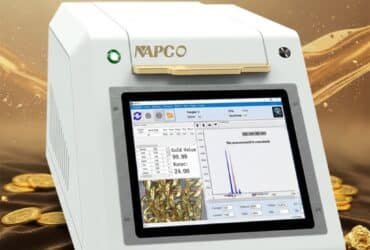
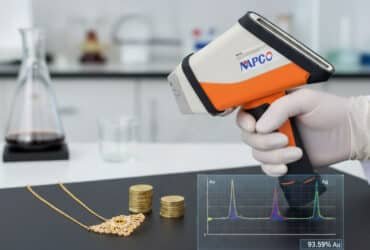
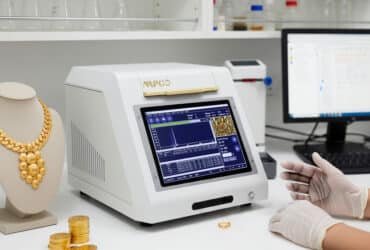
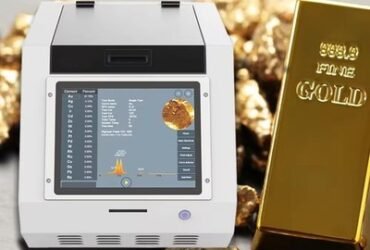
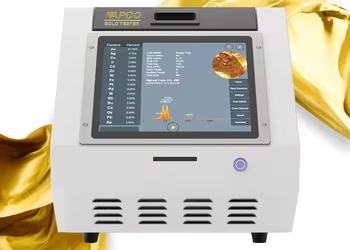
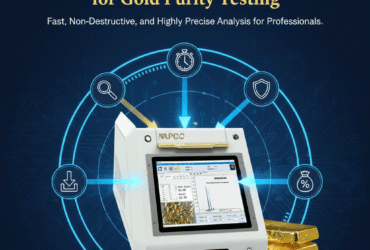
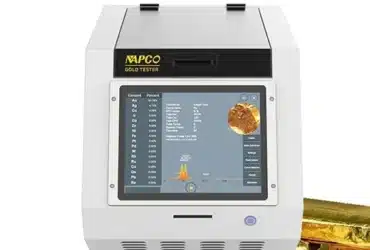
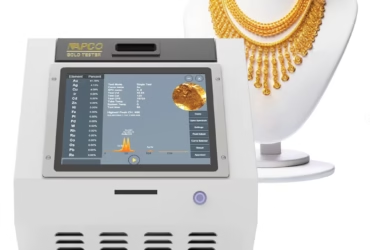
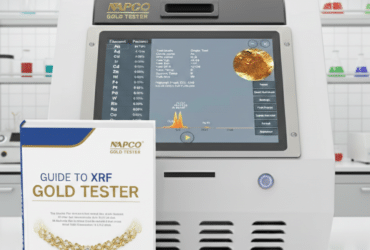
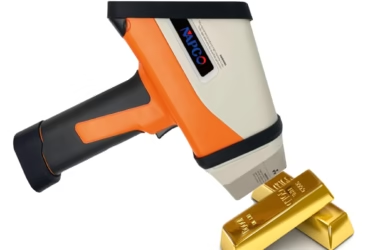
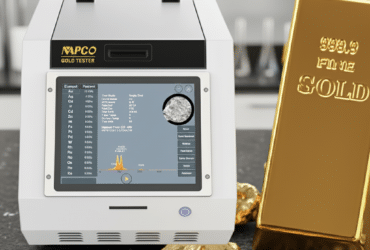
XRF gold testers represent the gold standard for testing jewelry. These machines use X-ray technology to analyze the composition of a metal without damaging it. The result? Quick, accurate, and non-invasive gold testing.
How XRF Works:
The tester directs X-rays onto the jewelry.
The machine measures how the metal responds, identifying its purity in karats or as a percentage.
XRF machines are used by jewelers, refiners, and appraisers for consistently accurate results.
Benefits:
Completely non-destructive.
Provides detailed compositions of gold, silver, and other metals.
Ensures high accuracy and efficiency for professionals.
If you’re running a jewelry showroom, gold loan service, or recycling business, investing in an XRF gold tester makes gold testing faster and more reliable.
2. Acid Testing
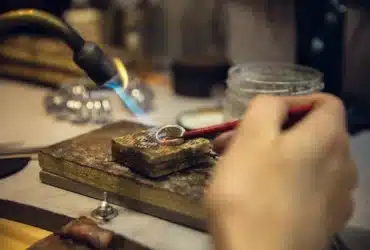
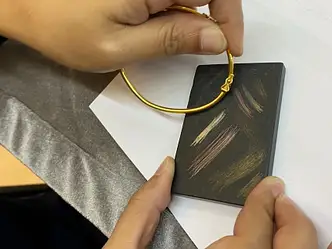
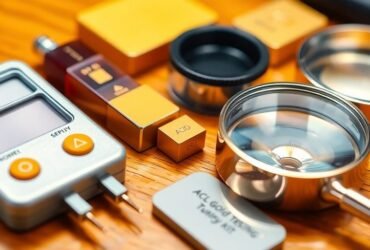
Acid testing kits are one of the more affordable options for determining gold authenticity. Acid solutions of varying strengths correspond to different karat values, such as 10k, 14k, or 24k.
How to Perform Acid Testing:
Scratch the jewelry lightly on a testing stone to create a mark.
Apply a small drop of acid to the mark.
Observe the reaction. If the mark remains unaffected, the gold is genuine. Otherwise, it will dissolve or fade, depending on the karat level.
Drawbacks:
Semi-destructive method (requires scratching the jewelry).
Limited accuracy compared to advanced testing options.
3. Electronic Gold Testers
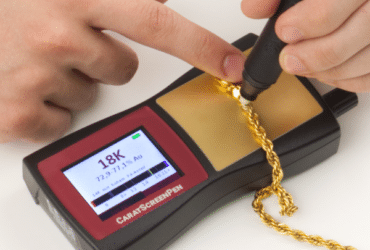
Electronic gold testers measure the electrical conductivity of gold. These portable devices can help detect the purity of gold up to 24 karats.
How They Work:
Place a probe or sensor on the jewelry.
The tester provides a reading indicating the karat or purity percentage.
Use Case:
Ideal for those who frequently deal with gold, such as appraisers and gold loan businesses, and need an inexpensive but effective tool.
DIY Methods for Detecting Gold
If you don’t have access to professional equipment, these simple tests can give you a general idea of whether your jewelry is genuine gold.
1. Float Test
Gold is denser than most metals and sinks completely when placed in water.
Fill a container with water.
Drop the jewelry into the water.
If it sinks immediately, it’s likely genuine gold. If it floats or hovers, it may not be real gold.
Limitations:
This test only checks density and won’t determine gold purity or karats.
2. Magnet Test
Genuine gold is non-magnetic. Test your jewelry by holding a strong magnet close to it.
If the jewelry sticks to the magnet, it likely contains base metals.
If it doesn’t react, it might be real gold.
Caution:
Gold-plated items might also pass this test, so use it alongside other testing methods.
3. Bite Test
This old-fashioned test involves biting the jewelry gently. Pure gold is soft and will show slight indentations.
Why It’s Risky:
This method can damage your teeth or the jewelry.
Modern counterfeit techniques can mimic gold’s softness.
Tips for Accurate Gold Testing
Use Multiple Tests: Relying on a single test may not always yield accurate results. For instance, combining the acid and XRF methods ensures precision.
Inspect Hallmarks: Traditional gold jewelry often comes with stamps indicating its karat, such as “18k” or “22k.” While helpful, hallmarks can also be faked.
Consider Expert Help: When in doubt, bring your jewelry to a professional jeweler or testing lab.
How Our XRF Testers Make Gold Testing Easier
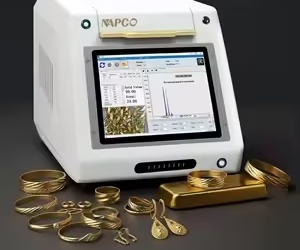
At Napco Precision Instruments Co., Ltd., we specialize in manufacturing industry-leading XRF gold testers, trusted by jewelry professionals worldwide. Our machines offer unparalleled accuracy in identifying gold purity and detecting counterfeit metals.
Why Choose Napco XRF Testers?
Non-destructive testing maintains the integrity of your jewelry.
Reliable results for a range of applications, from hallmarking to recycling.
Easy-to-use machines designed for efficiency.
For jewelry stores, goldsmiths, refiners, and more, our XRF solutions ensure gold testing is no longer a guess but a science.
Final Thoughts
Testing gold jewelry is essential to verify its authenticity and value. While DIY methods offer quick insights, professional tools like XRF gold testers provide unmatched accuracy and reliability. Whether you’re a jeweler, a pawn shop owner, or a buyer, understanding how to test gold jewelry empowers you to make informed decisions and build trust with your clients.
Explore high-quality XRF testers at napcolab.com for precise, effortless gold testing. Take the guesswork out of gold purity testing today!